Twelve years after the Dream Team, the United States lost its aura. At the 2004 Olympics in Athens, an American roster full of NBA players lost three games and settled for bronze. Two years later, at the 2006 World Championship in Japan, it happened again. The country that invented basketball was no longer the automatic favorite.
The response was a complete rebuild — of the program, the culture and the expectations. The team that took the floor in Beijing in 2008 was nicknamed the Redeem Team, and it had one goal.
What went wrong
Athens was a shock from the first game. The United States lost its opener to Puerto Rico by 19 points, a result that stunned fans at home. The team, assembled quickly and missing several stars who had declined invitations, never looked comfortable with the international game: the shorter three-point line, the physical play, and opponents who had played together for years. Losses to Lithuania and then Argentina in the semifinals followed. Argentina, led by Manu Ginóbili, went on to win gold.
The problem was not talent. It was preparation, continuity and respect for the competition. The rest of the world had built national teams that trained and played together every summer. The United States had been assembling all-star rosters a few weeks before each tournament.
A new structure
After Athens, USA Basketball handed control of the men's national team to Jerry Colangelo, a longtime NBA executive. He made sweeping changes. Players were asked to commit to the program for several years, not a single summer. The national team would train together, play exhibition games abroad and build an identity.
Colangelo hired Mike Krzyzewski, Duke's head coach, to lead the team — an unusual choice of a college coach for a roster of NBA stars, but one that emphasized teaching, structure and buy-in.
The new approach did not produce instant results. At the 2006 World Championship, the United States lost to Greece in the semifinals and again finished with bronze. But this time, the core of the team stayed together, and the lessons stuck.
The roster
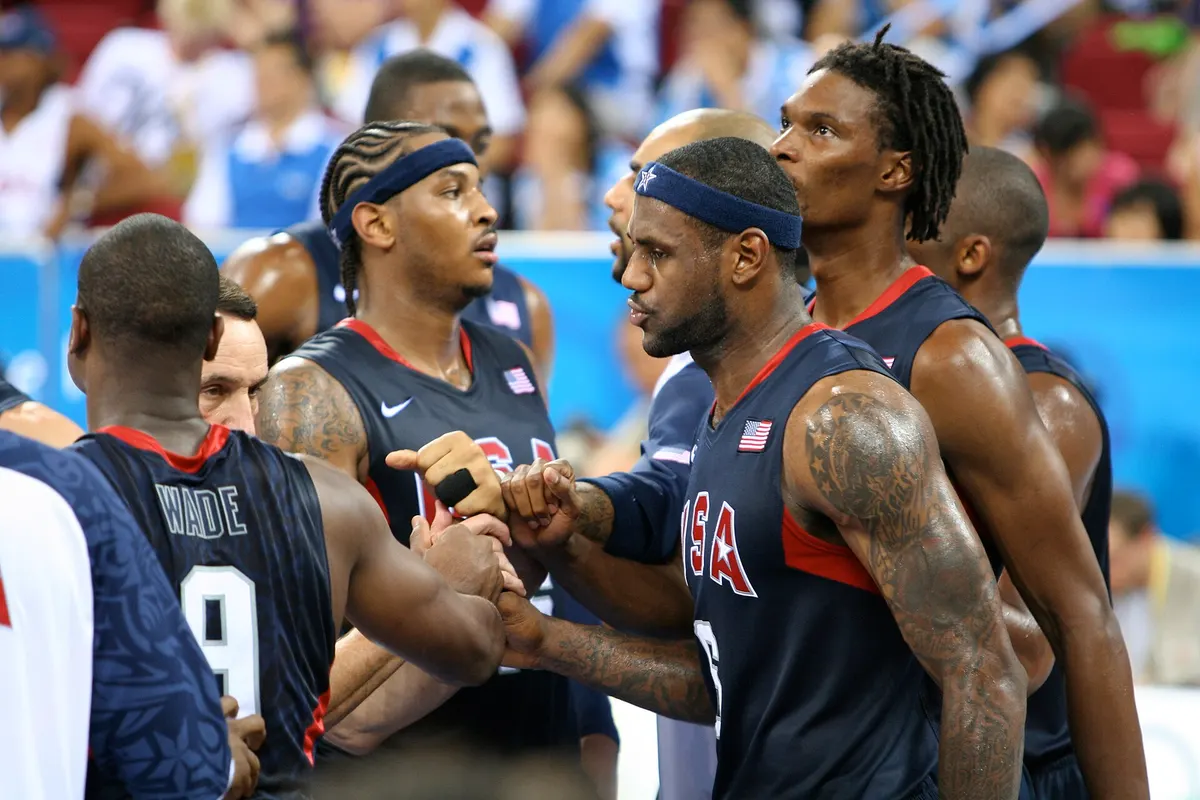
By 2008 the commitment had spread through the league's elite. The Beijing roster included:
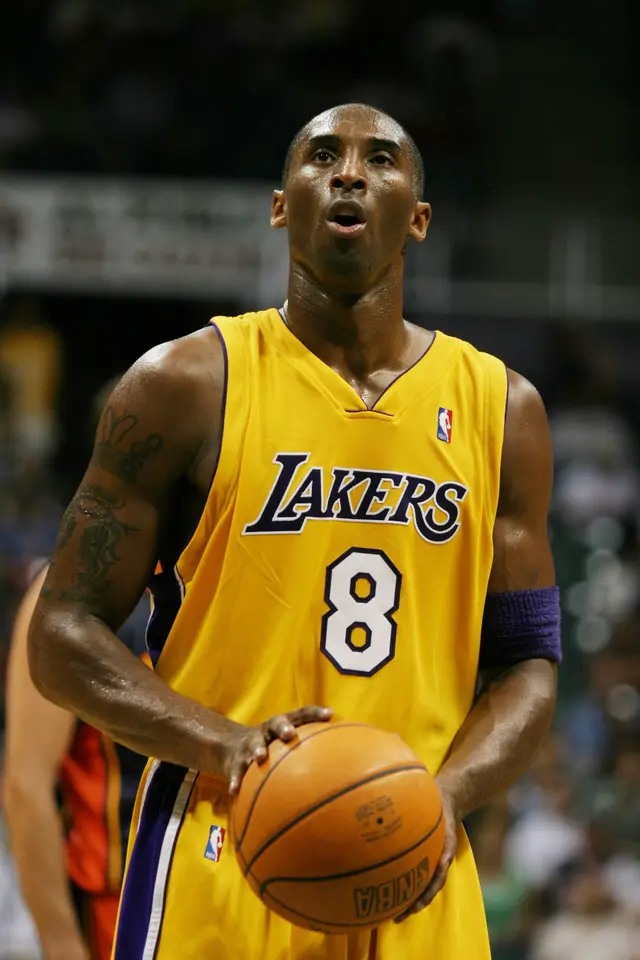
- Kobe Bryant, the reigning NBA MVP, playing in his first Olympics and embracing a defensive role
- LeBron James, Dwyane Wade and Carmelo Anthony, the stars of the 2003 draft class
- Chris Paul and Deron Williams at point guard
- Dwight Howard and Chris Bosh in the frontcourt
- Jason Kidd, the veteran leader
- Michael Redd, Tayshaun Prince and Carlos Boozer
Several of them had been part of the disappointments in 2004 or 2006. They took the Olympics seriously in a way that the program had sometimes struggled to.
Beijing
The early rounds looked like a statement. The United States won every group game comfortably, including a rout of Spain, the reigning world champion. Wade, coming off the bench, was the team's leading scorer. The defense was ferocious, turning steals into dunks and fast breaks.
In the semifinals, the Americans beat Argentina — the team that had ended their hopes in Athens. The final would be a rematch with Spain.
The gold medal game
Spain was a far stronger opponent than the group-stage score suggested. Led by Pau Gasol, a teenage Ricky Rubio and a deep, experienced roster, the Spanish team played with confidence and precision. The game, played on August 24, 2008, turned into one of the best in Olympic history.
The United States led for much of the game, but Spain kept answering, cutting the margin to a few points deep into the fourth quarter. At that point, Bryant took over. He hit a crucial three-pointer while being fouled for a four-point play and made several key baskets down the stretch. Wade finished with 27 points, the game high. The final score was 118–107.
The gold medal had been won, and the national team's reputation restored.
What the Redeem Team changed
The Beijing win was not just a medal. It established a model. The commitment-based program that Colangelo and Krzyzewski built carried the United States to gold again in 2012 and 2016, and the national team continued winning Olympic golds in the years that followed.
It also changed how American stars viewed international basketball. Playing for the national team became a badge of honor rather than an obligation. Many players credit the experience with raising their own standards — practicing with the best players in the world every summer, and learning that talent alone does not win.
Remembering the lesson
The Dream Team showed the world how good American basketball could be. The Redeem Team showed America that the world had caught up. Winning in Beijing required preparation, sacrifice and humility — the qualities that had been missing in Athens.
That is the real legacy of 2008: the United States still wins, but it no longer assumes it will.