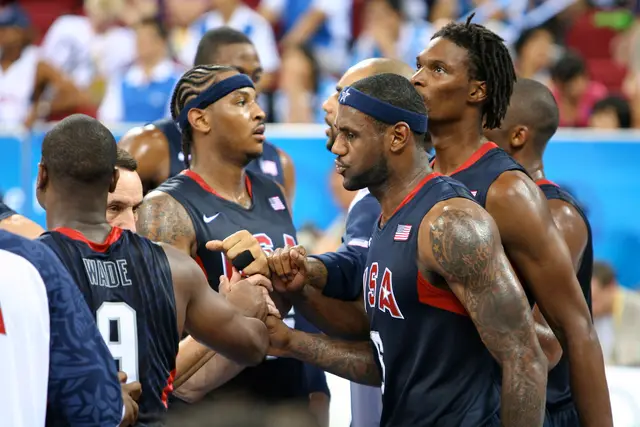
Some teams win. A few teams dominate. The 1992 United States Olympic basketball team did something different: it changed how the whole world saw the sport. In Barcelona, twelve players — eleven of them future Hall of Famers — turned an Olympic tournament into a global celebration of basketball, and planted the seeds of the international game we know today.
Why it happened
For decades, Olympic basketball was off-limits to NBA players. The United States sent college stars instead, and for a long time that was enough. But the rest of the world was catching up. At the 1988 Games in Seoul, an American college team lost to the Soviet Union in the semifinals and went home with bronze. For a country that considered basketball its own invention, it was a jolt.
In 1989, FIBA, the sport's international governing body, voted to open the Olympics to professional players. The decision was not driven by the United States alone — many in international basketball wanted the best players in the world on the Olympic stage. But it meant that for 1992, USA Basketball could, for the first time, call on the NBA.
Building the roster
The selection was as much a story as the games. The roster that came together read like a list of the era's defining players:
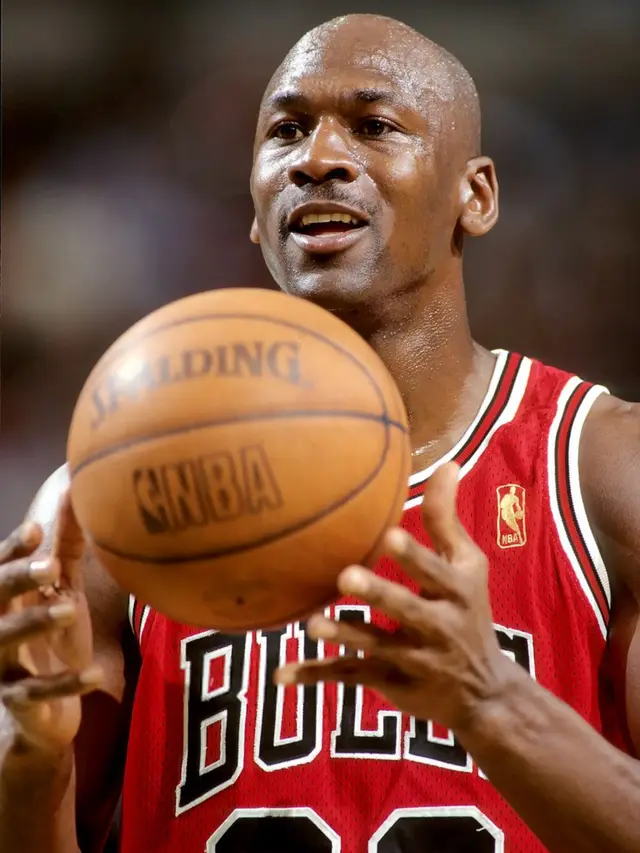
- Michael Jordan, at the peak of his powers and fresh off back-to-back championships with the Chicago Bulls
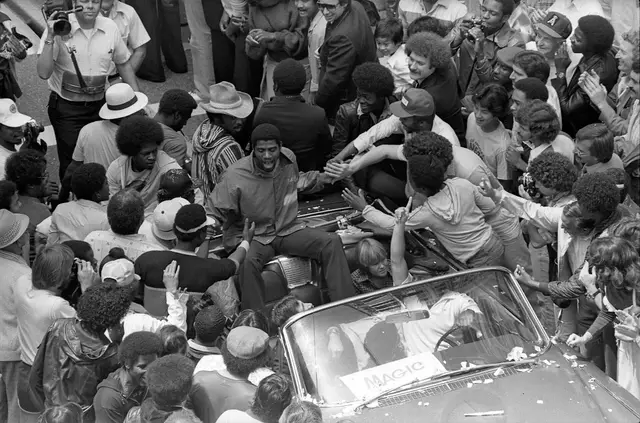
- Magic Johnson, who had retired from the NBA in late 1991 after announcing he was HIV-positive, and whose presence carried enormous emotional weight
- Larry Bird, near the end of his career and playing through serious back problems
- Charles Barkley, Patrick Ewing, Karl Malone, John Stockton, Chris Mullin, David Robinson, Scottie Pippen and Clyde Drexler
- Christian Laettner, the lone college player, chosen from Duke
Chuck Daly, who had coached the Detroit Pistons to two titles, was the head coach, with Lenny Wilkens, P.J. Carlesimo and Mike Krzyzewski as assistants. The exclusion of Detroit's Isiah Thomas, one of the best guards of his generation, became one of the most debated decisions in American sports and remains a sore point decades later.
The scrimmage nobody saw
The team qualified at the Tournament of the Americas in Portland in the summer of 1992, crushing every opponent. But the game many of the players later called the best they ever took part in was not played in front of a crowd at all.
Before the Olympics, during a training stop in Monte Carlo, Daly split the squad for an intense, closed-door scrimmage — Jordan's side against Magic's. The players have described it as fiercely competitive, full of trash talk and some of the highest-level basketball imaginable, with Jordan's team coming out on top. For years it lived on only in the participants' stories, which only added to the legend.
Barcelona
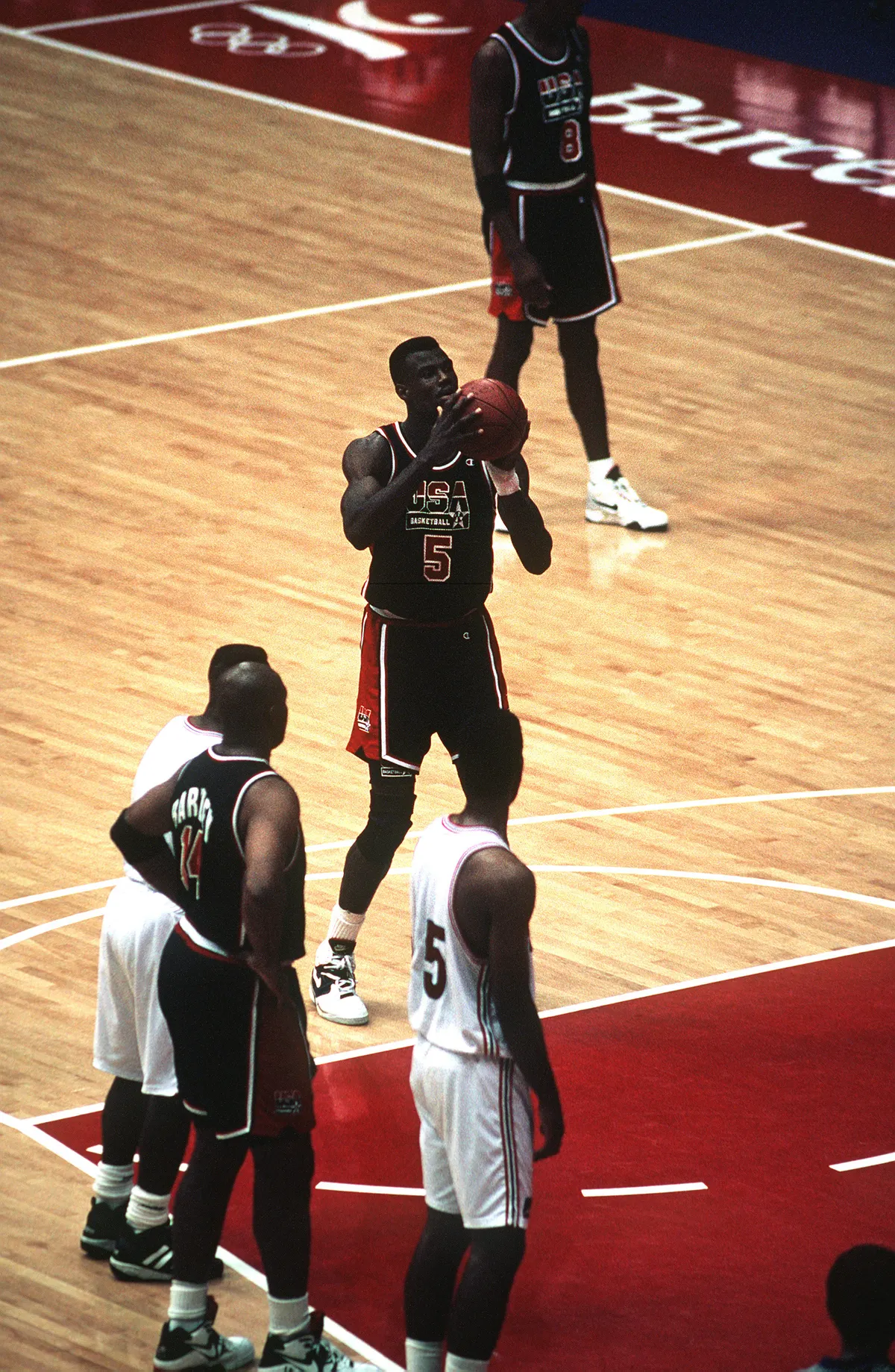
The Olympic tournament itself was never in doubt. The United States went 8–0 and won by an average margin of roughly 44 points. The opening game, a 116–48 win over Angola, set the tone and included an elbow from Barkley that drew boos and plenty of commentary.
What made Barcelona special was not the margins but the atmosphere. Opponents were openly thrilled to share the court with players they had grown up watching on grainy tapes. Some asked for photographs and autographs. The American players were treated like touring rock stars, mobbed wherever they went.
The gold medal game against Croatia was the closest thing to a real contest. Croatia had genuine NBA-level talent in Dražen Petrović and Toni Kukoč, and the Croatians led briefly early. Then the Americans pulled away to win 117–85. Barkley led the team in scoring for the tournament.
What it left behind
The Dream Team's legacy is less about any single game than about what it set in motion.
Global reach. The 1992 Games were broadcast around the world at a moment when international television and sports marketing were expanding fast. Millions of young people outside the United States watched Jordan, Magic and Bird together and fell for the game.
A new generation. Over the following two decades, the NBA filled with stars from Europe, South America, Africa and Asia. Many of them grew up in the years after Barcelona, and the league's international talent pool became one of its defining features.
A rising standard. The rest of the world kept improving — enough that, by the 2004 Olympics in Athens, the United States settled for bronze. That disappointment led to a rebuilt program and the 2008 "Redeem Team," which won gold in Beijing. The fact that American teams can no longer simply show up and win is, in a sense, part of the Dream Team's legacy too.
The team that can't be repeated
There will never be another Dream Team, and not only because of the talent. It was the first time NBA players went to the Olympics, the first time the world saw so many of the game's icons together, and the last time the gap between the United States and everyone else was quite so wide. Those conditions cannot be recreated.
Barcelona 1992 was not just a tournament the Americans won. It was the summer basketball became a truly global sport.