There is no video of the greatest scoring night in basketball history. There is no television footage, no highlight reel, no clip of the hundredth point dropping through the net. What survives is a box score, a scratchy stretch of local radio, a handful of eyewitnesses whose memories grew more vivid with every telling — and one photograph of a tired, smiling giant holding a sheet of paper with a number scrawled on it: 100.
That absence is part of why the night still feels mythical. On March 2, 1962, Wilt Chamberlain did something so far outside the boundaries of the sport that, more than six decades later, no one has matched it.
A late-season game nobody circled
The setting could hardly have been less glamorous. The Philadelphia Warriors were playing a "home" game against the New York Knicks not in Philadelphia but at the Hershey Sports Arena, in the Pennsylvania town built around a chocolate factory. Neutral-site games were a common way for early NBA teams to sell tickets, and this one drew a crowd of about 4,124. It was a Friday night late in the regular season. The Knicks were well out of the playoff race. Few reporters made the trip.
Chamberlain, then in his third professional season, was already rewriting what anyone thought a basketball player could do. In 1961–62 he averaged 50.4 points per game — not in one hot month, but across an entire season. Earlier that year, in December, he had scored 78 in a triple-overtime game against the Los Angeles Lakers, breaking his own league record. Big numbers were normal for him. A hundred was not.
Free throws, of all things
The first clue that something unusual was happening came from the free-throw line, the one place Chamberlain was famously unreliable. That season he was shooting his free throws underhanded, and on this night they kept falling. He finished 28 of 32 from the line — a near-perfect performance from one of the worst free-throw shooters of his era. Without those points, a hundred would have been out of reach.
From the field he was simply relentless: 36 of 63. The Knicks, short of size inside, had no answer for a 7-foot-1 center who could run, jump and finish over anyone in the league. As the totals climbed, the Warriors stopped pretending this was an ordinary game. Teammates looked for Chamberlain on nearly every possession. The public-address announcer began reading out his running total. The crowd, small as it was, started chanting for more.
The race against the clock
Late in the fourth quarter, the game itself became secondary. The Warriors were comfortably ahead; the only question in the building was whether Chamberlain would reach three figures. The Knicks, unwilling to be the team that gave up a hundred to one man, began holding the ball and fouling other Warriors to keep it away from him. Philadelphia answered by fouling back to get the ball again.
It was messy, a little absurd and completely compelling. Chamberlain reached 100 in the final minute, and fans poured onto the court before play could settle back into anything resembling a basketball game. The final score — 169 to 147 — was itself one of the highest-scoring games the league had seen.
The photograph
Afterwards, in the locker room, a team staffer took a sheet of paper and wrote "100" on it by hand. Chamberlain held it up for a wire-service photographer. That image became the night's only real visual record, and it is the picture almost everyone has in mind when they think of the game.
It is a strangely modest artifact for such an immodest achievement: no arena lights, no confetti, just a player in a sleeveless jersey and a handwritten number. It fits the night perfectly.
Why it still stands
Scoring 100 points requires a particular combination of conditions that the modern game rarely, if ever, allows.
- Pace. NBA teams in the early 1960s played at a speed that would look frantic today, taking far more shots per game. More possessions meant more chances.
- Usage. On that night the Warriors deliberately funneled almost everything through one player. Modern offenses spread the ball, and coaches are wary of a single player monopolizing possessions.
- The opponent. The Knicks were a struggling team without the size to match up with Chamberlain inside.
- The player. Above all, there was Chamberlain: a physical outlier with stamina to play every minute and a willingness to keep shooting.
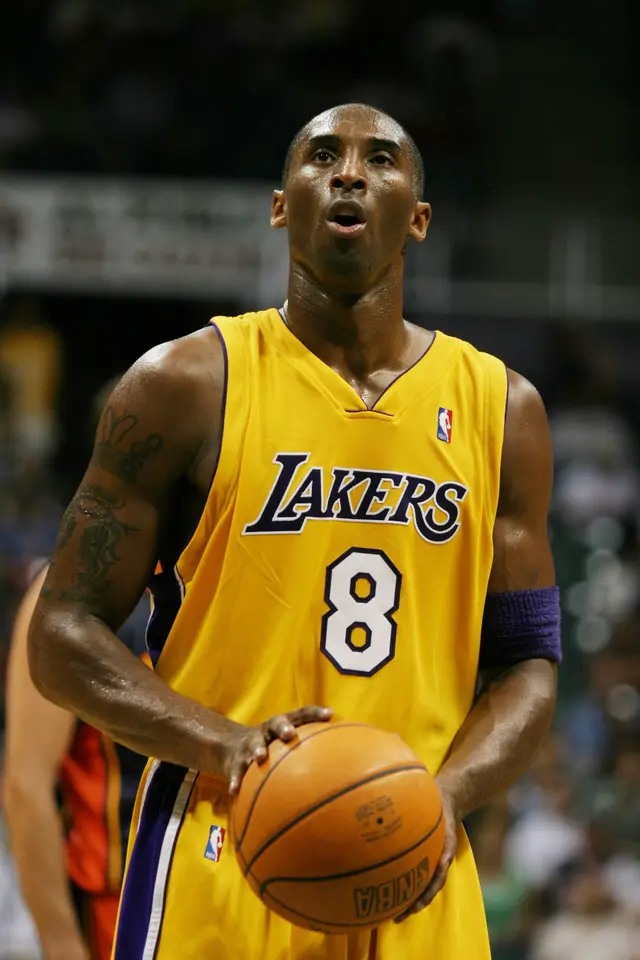
In the decades since, only a handful of players have reached even 70 in a game. Kobe Bryant's 81 against the Toronto Raptors in January 2006 is the most famous of those nights — and it still fell well short of three figures.
A record that shaped a reputation
For Chamberlain, the 100-point game was both a crowning moment and a burden. It became shorthand for everything people admired and resented about him: the sheer dominance, and the suspicion that he cared more about numbers than winning. His great rival, Bill Russell, kept collecting championships with the Boston Celtics while Chamberlain kept collecting records. Chamberlain would eventually win two titles of his own, but the debate about individual brilliance versus team success followed him for the rest of his career.
The Warriors moved to San Francisco after that season, and the Hershey arena never hosted anything like it again. Yet the game remains the most famous regular-season night in NBA history — a performance known to millions of fans who have never seen a single second of it.
Maybe that is the real reason it endures. Without footage, every fan has to imagine it. And in the imagination, Wilt Chamberlain never misses.